
Other Becketts
A cura di Daniela Caselli, Steven Connor, Laura Salisbury
Tallahassee (Florida), Journal of Beckett Studies Books, 2002, pp. 238, US dollar 18,95
ISBN 1-892779-01-6
Tallahassee (Florida), Journal of Beckett Studies Books, 2002, pp. 238, US dollar 18,95
ISBN 1-892779-01-6
Data di pubblicazione su web 01/04/2002
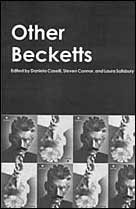
Appaiono pubblicati in volume gli studi comparsi nel "Journal of Beckett Studies" (vol X, nn. 1-2, inverno/primavera 2002). La prestigiosa rivista, diretta da S.E. Gontarski, è uno dei luoghi deputati all'incontro dei più recenti e approfonditi studi sull'autore di Finale di Partita. La drammaturgia beckettiana è un inesplorato, ancora, ma battutissimo continente per attori, drammaturghi e storici dello spettacolo.
Nell'introduzione (di D. Caselli, S. Connor e L. Salisbury) si rende conto dell'evoluzione delle prospettive critiche degli anni '90. Obiettivo del volume è andare 'oltre' le caratterizzazioni esegetiche liberandole dagli schematismi e cercando di riportare tutti gli other Becketts all'interno di una comunità beckettiana di studi: "the putative 'other becketts' will smoothly be 'absorbed into the growing mass of discourse on Beckett".
I diversi studi sono distribuiti in sezioni tematiche. Di Beckett è osservato il suo rapporto con i Media (in Through a Screen Darkly: Beckett and Media); la critica beckettiana è protagonista della prima sezione del volume (Critical Differences: Reading Beckett Reflexively), e il 'valore' filosofico presente nell'opera dello scrittore irlandese, o una lettura in chiave filosofica della stessa, sono al centro di Beckett's Philosophical Differences.
Gli autori degli scritti provengono da Australia, Francia, Inghilterra, Irlanda e Stati Uniti.
Nell'introduzione (di D. Caselli, S. Connor e L. Salisbury) si rende conto dell'evoluzione delle prospettive critiche degli anni '90. Obiettivo del volume è andare 'oltre' le caratterizzazioni esegetiche liberandole dagli schematismi e cercando di riportare tutti gli other Becketts all'interno di una comunità beckettiana di studi: "the putative 'other becketts' will smoothly be 'absorbed into the growing mass of discourse on Beckett".
I diversi studi sono distribuiti in sezioni tematiche. Di Beckett è osservato il suo rapporto con i Media (in Through a Screen Darkly: Beckett and Media); la critica beckettiana è protagonista della prima sezione del volume (Critical Differences: Reading Beckett Reflexively), e il 'valore' filosofico presente nell'opera dello scrittore irlandese, o una lettura in chiave filosofica della stessa, sono al centro di Beckett's Philosophical Differences.
Gli autori degli scritti provengono da Australia, Francia, Inghilterra, Irlanda e Stati Uniti.
La redazione
Indice
Indice
Introduction
di Daniela Caselli, Steven Connor, and Laura Salisbury
Critical Differences: Reading Beckett Reflexively
Russell Smith
"Someone" (The Other Beckett)
Paul Stewart
The Need for Beckett
Joe Brooker
What Tedium: Boredom in Malone Dies
Beckett's Philosophical Differences
Andrew Gibson
Badiou, Beckett, Watt, and the Event
Garin Dowd
On Four Kantian Formulas That Might Summarise the Beckettian Poetic
Mark Pedretti
'The Space of a Moment": How It Is and the Event of Narrative
Paul Sheehan
"Nothing ls More Real": Experiencing Theory in the Texts for Nothing
Through a Screen Darkly: Beckett and Media
Jonathan Bigneli
Beckett in Television Studies
Eckhart Voigts-Virchow
Face Values: Beckett, Inc., The Camera Plays, and Cultural Liminality
"Queer things go on there": Queering Malone Dies
Stéphanie Ravez
From Cythera to Philautia, an Excursion Into Beckettian Love
Will Bishop
Malone's "Queer" Neighbors
Ghosting the Subject
Anna McMullan
Virtual Subjects: Performance, Technology, and the Body in Beckett's Late Theatre
Paul Lawley
That Time and the Dynamics of Being
Katherine Weiss
Bits and Pieces: The Fragmented Body in Not I and That Time
Derval Tubridy
"The subject doesn't matter, there is none": Language, Subjectivity, and Aporia in Beckett's Unnamable
Nothing to Express
Elizabeth Barry
"Take into the air my quiet breath": Samuel Beckett and English Romanticism
Sinéad Mooney
'These untenanted Is": Beckett's Self Translation as Poetics of Self-Divestiture
Notes on Contributors
Introduction
di Daniela Caselli, Steven Connor, and Laura Salisbury
Critical Differences: Reading Beckett Reflexively
Russell Smith
"Someone" (The Other Beckett)
Paul Stewart
The Need for Beckett
Joe Brooker
What Tedium: Boredom in Malone Dies
Beckett's Philosophical Differences
Andrew Gibson
Badiou, Beckett, Watt, and the Event
Garin Dowd
On Four Kantian Formulas That Might Summarise the Beckettian Poetic
Mark Pedretti
'The Space of a Moment": How It Is and the Event of Narrative
Paul Sheehan
"Nothing ls More Real": Experiencing Theory in the Texts for Nothing
Through a Screen Darkly: Beckett and Media
Jonathan Bigneli
Beckett in Television Studies
Eckhart Voigts-Virchow
Face Values: Beckett, Inc., The Camera Plays, and Cultural Liminality
"Queer things go on there": Queering Malone Dies
Stéphanie Ravez
From Cythera to Philautia, an Excursion Into Beckettian Love
Will Bishop
Malone's "Queer" Neighbors
Ghosting the Subject
Anna McMullan
Virtual Subjects: Performance, Technology, and the Body in Beckett's Late Theatre
Paul Lawley
That Time and the Dynamics of Being
Katherine Weiss
Bits and Pieces: The Fragmented Body in Not I and That Time
Derval Tubridy
"The subject doesn't matter, there is none": Language, Subjectivity, and Aporia in Beckett's Unnamable
Nothing to Express
Elizabeth Barry
"Take into the air my quiet breath": Samuel Beckett and English Romanticism
Sinéad Mooney
'These untenanted Is": Beckett's Self Translation as Poetics of Self-Divestiture
Notes on Contributors